


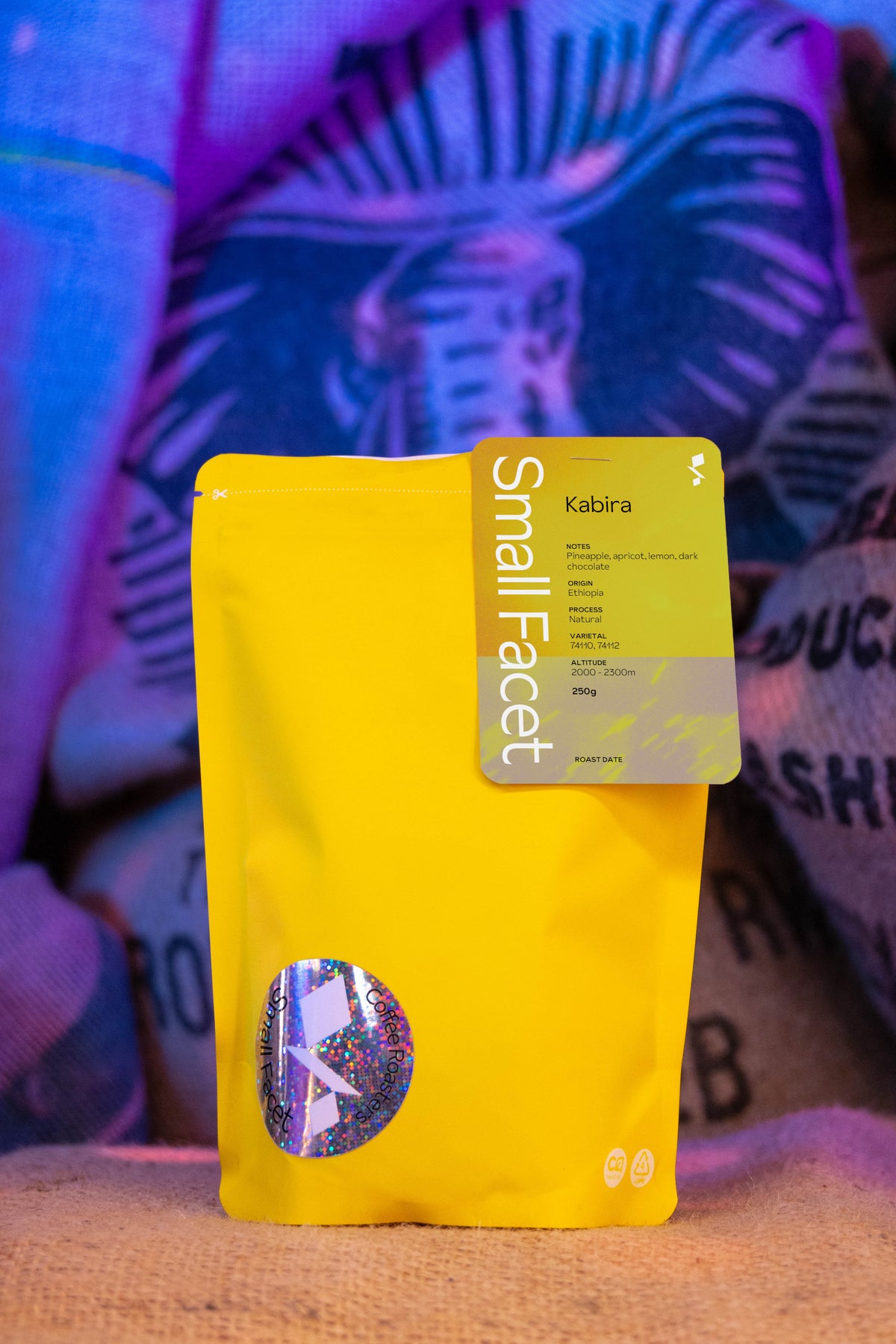
Kabira
Kabira
Expect head nodding as soon as this track starts
Pineapple, Apricot, Lemon, and Dark Chocolate
Tastes Best: Filter
Couldn't load pickup availability


Provenance
Region: Jimma, West Ethiopia
Country: Ethiopia
Elevation: 2000-2300masl
Processing: Natural
Varieties: 74110, 74112

Musical Breakdown
Song: ‘Electric Relaxation’ by A Tribe Called Quest
Genre: Jazz Rap & Old-School Hip-Hop
Tempo: 119bpm
Bass/ Mid/ Treble: Silky bass, singalong treble and a middle that makes you move
Mood: Start your day off right and lock in for that big project
A Little Deeper
A Little Deeper
‘Ooooh, yeah! So smooth.’ - There are so many layers and moments to be enjoyed with this coffee. It is sweet and subtle with the expected notes of a natural. Very bright fruits of pineapple and apricot contrast beautifully with a luxurious dark chocolate, all topped off with a lemon acidity finishing move. With a syrupy mouthfeel, we liken this coffee to a boujee breakfast cereal bar - a perfect way to start the day. Electric Relaxation felt like the obvious comparison; the bass locks you into a smooth groove while the song keeps developing with sparkly and unexpected moments of treble. Combine that with liquid flows over the top, and this is one of those coffees you can just sink into and keep discovering new moments.
This coffee is produced in western Ethiopia in the Jimma Zone by Mustafa Abakeno. A smallholder farmer and exporter, Mustafa inherited a 10-hectare farm from his father in the heart of Ethiopia’s coffee region. Through dedication to his craft, commitment to quality, and reinvestment in the surrounding area, he has expanded to 50 hectares of farmland. Turning a family legacy into a dedicated coffee export business, showcasing the unique flavours of Ethiopian coffee to the global market.
It’s a pleasure to be able to bring you this coffee as it fits right into our mission statement. Mustafa is an EU-certified organic producer, from farm to export. They provide full traceability from individual farmer to processing unit. And they work closely with 217 smallholder farmers to ensure traditional Ethiopian coffee cultivation methods are preserved. His farm is planted with a range of coffee varieties sourced from the Jimma Agricultural Research Centre, reflecting both the region’s coffee heritage and ongoing work to improve quality and productivity.
Mustefa began by investing in a three-disc coffee pulper, allowing him to process part of his harvest as fully washed coffee. This gave him greater control over post-harvest handling and helped improve consistency across his production. In 2018, following regulatory changes that allowed producers to export directly, Mustefa began working as an exporter and established the Beshasha wet mill. The station processes coffee from Mustefa’s own farm as well as cherry delivered by neighbouring outgrowers, who typically manage farms ranging from around four to ten hectares.
Mustefa’s relationship with Falcon in Addis Ababa has focused on improving quality through direct collaboration across cherry selection, drying, lot separation and farm management. This work has also supported a more direct supply chain, helping more of the value return to producers while improving traceability for buyers.
In 2021, agronomist Harun joined the Falcon team and began working closely with Mustefa and the farmers supplying cherry to the washing station. His work has included training and support at farm and station level, with a focus on good agricultural practices, improved cherry selection and more consistent drying. Improvements at the station have included the use of shade netting to protect drying beds during the hottest hours of the day, tighter cherry selection at delivery, tagging day lots for separation and regular monitoring of moisture levels before lot assembly.
Badeyi is one of the additional purchasing sites acquired by Mustefa during the 2022 off-season, alongside Echamo, Jarso and Saadi. These sites act as collection points where cherries are selected and purchased from neighbouring farmers before being transported to Mustefa’s main processing stations at Beshasha and Kabira. The Badeyi site strengthens Mustefa’s ability to source cherry from surrounding farmers while maintaining closer control over selection at the point of purchase.
Natural coffee cherries are delivered and floated to remove immature or lower-density fruit. The coffee is then skin-dried under shade for one day before being moved to raised beds, where it dries for around 20 to 30 days depending on weather conditions. Regular turning and careful moisture monitoring are used to support even drying and reduce the risk of spoilage.
Mustefa has continued to invest in infrastructure to support quality and growth. He has built a modern warehouse in Agaro with facilities for milling natural processed coffees, strengthening his control over post-harvest preparation. The development of purchasing sites such as Badeyi also reinforces his role in connecting neighbouring farmers to a more structured and traceable supply chain.
The Badeyi lot sits within this wider supply structure, reflecting Mustefa’s focus on selective cherry purchasing, controlled processing and direct relationships with nearby farmers. His continued investment in processing, drying, moisture control and farmer training supports both coffee quality and the development of the surrounding coffee-growing communities.